← Back to the coffee market
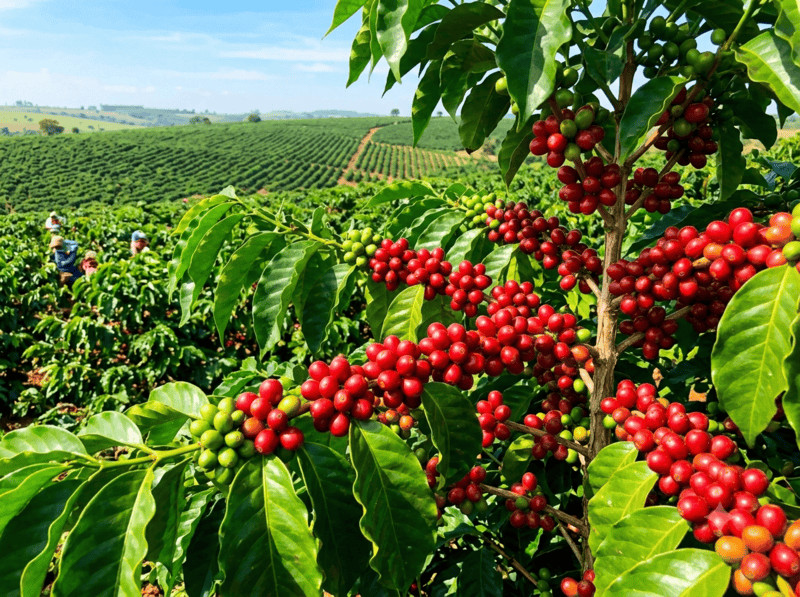
Arabica vs. Robusta: What Actually Separates the Two
2026-07-22 · Arabica Republic
Nicaragua
Costa Rica
Roast Education
KC price at time of writing
$3.08/lb
Coffee sold worldwide comes almost entirely from two species: Coffea arabica and Coffea canephora, commonly called robusta. They differ in genetics, growing requirements, flavor, and chemistry — not just marketing.
Genetics and origin Arabica is a tetraploid species (four sets of chromosomes) that originated in the highlands of Ethiopia. Robusta is diploid, native to lower-altitude, humid regions of sub-Saharan Africa. Arabica's genetic makeup gives it less variation resistance to pests and disease, which is one reason robusta earned its name — it's the hardier, more disease-resistant plant.
Growing conditions Arabica grows best at higher altitudes, typically 600–2,000 meters, in cooler climates with consistent rainfall. It's more sensitive to temperature swings and pests, particularly coffee berry borer and coffee leaf rust. Robusta thrives at lower altitudes, from sea level to about 800 meters, tolerates heat better, and resists leaf rust more effectively, making it cheaper and easier to farm at scale.
Chemical composition Robusta beans contain roughly twice the caffeine of arabica — commonly cited figures are about 2.7% caffeine by dry weight in robusta versus 1.5% in arabica. Robusta also has higher chlorogenic acid content, which contributes to a harsher, more bitter taste, and lower sugar content than arabica.
Flavor profile Arabica is generally described as smoother, with more perceived sweetness, acidity, and complex flavor notes (fruit, floral, or wine-like depending on origin). Robusta is typically described as stronger, more bitter, and often described as woody, rubbery, or grain-like, with a fuller body and thicker crema — a trait that makes it common in espresso blends and instant coffee.
Market and price Arabica accounts for roughly 60–70% of global coffee production and generally commands a higher market price than robusta, reflecting both higher production costs and stronger demand for its flavor profile in specialty coffee.